
One of the core missions of Societas Europaea Herpetologica (SEH) has always been to strengthen communication and collaboration among herpetologists, with the ultimate goal of improving knowledge and conservation of Europe’s amphibians and reptiles. Over the years, SEH has achieved this through its scientific journals, international congresses, task forces, and conservation advocacy at the European level.
However, despite its strong international reach, SEH long lacked a formal framework for structured collaboration with national and regional herpetological societies. This gap limited the potential for coordinated representation, shared visibility, and unified advocacy across Europe.
Why a European Board Was Needed
Effective engagement with European institutions—whether to influence conservation policy, respond to legislative initiatives, or secure funding—requires broad and legitimate representation. SEH already plays an active role in policy discussions, including petitions related to major European frameworks such as the Water Framework Directive and the Common Agricultural Policy. Yet, its voice could be significantly strengthened by officially representing national herpetological societies.
At the same time, national and regional societies benefit from greater international visibility, increased dissemination of their activities, and stronger links to European-wide initiatives. A formal partnership structure was therefore essential.
The Birth of the EBHS
To address this need, the European Board of Herpetological Societies (EBHS) was formally established and incorporated into the SEH by-laws during the SEH Ordinary General Meeting held in Milan in September 2019.
The EBHS creates a stable, flexible, and inclusive platform where SEH and its partner societies collaborate as equals. Its objectives are to:
-
Facilitate communication among European herpetologists
-
Promote mutual visibility of societies, journals, and congresses
-
Strengthen representation of herpetology at the European level
-
Complement existing European conservation and research networks
Importantly, the EBHS is designed to be non-restrictive and accessible, with low administrative burden and minimal financial barriers for participating societies.
How the EBHS Works
The EBHS is composed of:
-
One designated representative from SEH
-
One designated representative from each partner herpetological society
Each partner society becomes a partner member of SEH, granting it:
-
Representation within the EBHS
-
One voting right at the SEH Ordinary General Meeting
This structure ensures balanced participation while maintaining operational simplicity.
Founding Partner Societies
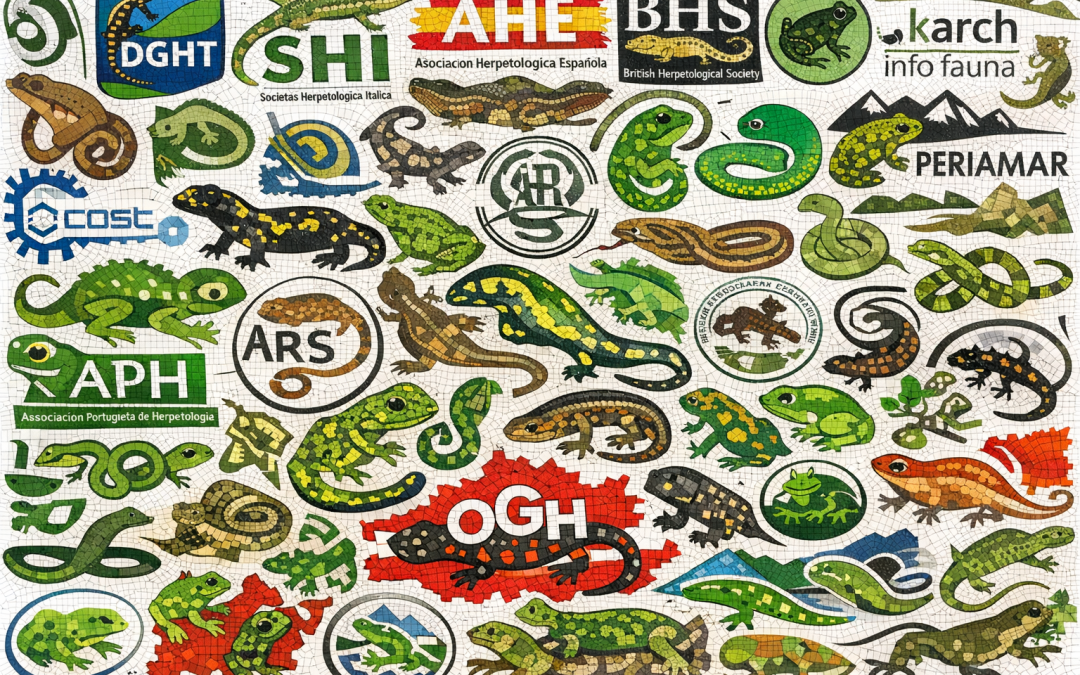
Following extensive consultation and refinement of the collaboration agreement, the EBHS was officially launched in 2022. The first group of partner societies to sign the agreement includes:
-
Asociación Herpetológica Española (Spain)
-
Associação Portuguesa de Herpetologia (Portugal)
-
British Herpetological Society (United Kingdom)
-
Deutsche Gesellschaft für Herpetologie und Terrarienkunde (Germany)
-
info fauna – karch (Switzerland)
-
Österreichische Gesellschaft für Herpetologie (Austria)
-
Societas Herpetologica Italica (Italy)
Together, these societies represent a substantial portion of Europe’s herpetological community and provide a strong foundation for future expansion.
Looking Ahead
The establishment of the EBHS marks an important milestone for European herpetology. It strengthens SEH’s role as a unifying platform, enhances collaboration across borders, and creates new opportunities for coordinated conservation action, research exchange, and policy engagement.
SEH will continue to invite additional European herpetological societies to join the EBHS, with the goal of achieving broad geographic coverage and inclusive representation. Updates on new members and joint activities will be regularly shared through SEH News and the SEH website.
European-based herpetological societies interested in joining the EBHS are warmly encouraged to contact SEH directly.
Source:
Adapted from SEH News – The European Board of Herpetological Societies (EBHS), published in Amphibia-Reptilia (2022). Download