
Announcement of the 2026 SEH Grant Winners
We are delighted to announce the recipients of the SEH Grant 2026.
This year, we received an outstanding number of high-quality applications from across Europe and beyond, reflecting the growing strength, diversity, and innovation within the herpetological community. The selection process was highly competitive, and we would like to sincerely thank all applicants for their time, effort, and inspiring proposals.
After careful evaluation, we are proud to support a group of exceptional projects that demonstrate scientific excellence, conservation relevance, and a strong commitment to advancing our understanding of amphibians and reptiles.
Congratulations to 2026 SEH Grant winners!
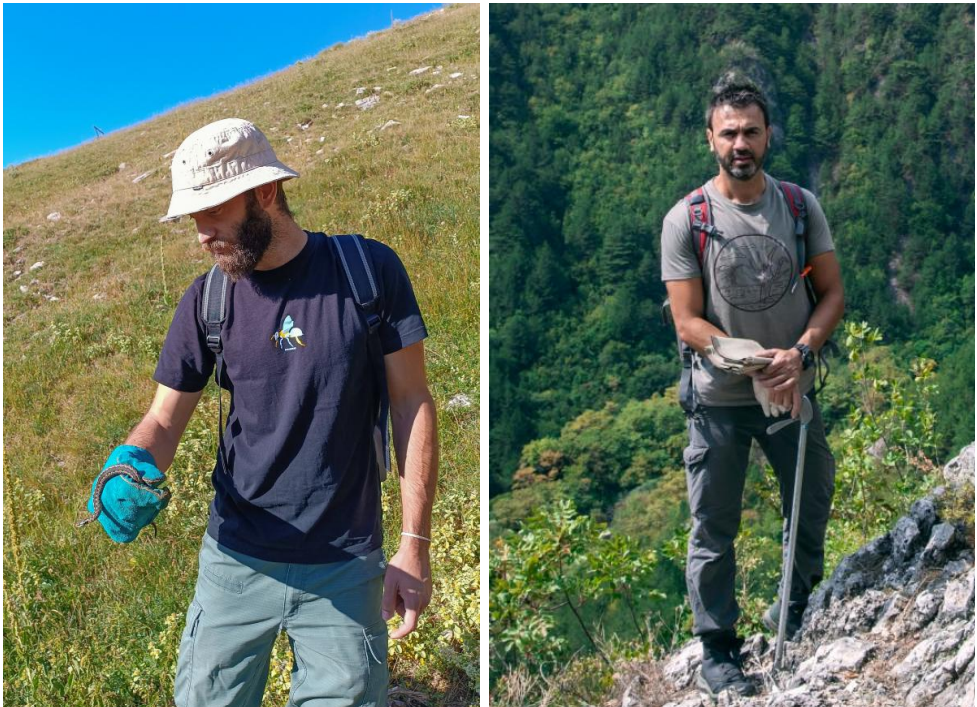
1) Thomas Daftsios, Ilias Strachinis
(Aristotle University of Thessaloniki)
From monitoring to targeted conservation: assessing the endemic Milos viper (Macrovipera schweizeri) across its island range
The Milos viper (Macrovipera schweizeri) is an emblematic and endangered snake species endemic to only four islands in the Aegean Sea: Milos, Kimolos, Polyaigos and Sifnos. Due to its restricted range and fragmented populations, the species is particularly vulnerable to human pressures and stochastic events alike. This project aims to update current knowledge of the species’ distribution, habitat use and conservation needs through extensive field surveys across all four islands and seasons.
Collected data will allow to map population distribution, quantify key threats and pressures on each island, and produce a complete stakeholder-ready conservation roadmap. The results will be disseminated to relevant national authorities and conservation bodies to support evidence-based management and protection of the species. Local stakeholder engagement will also be supported through presentations on the three inhabited islands to increase awareness and promote conservation.
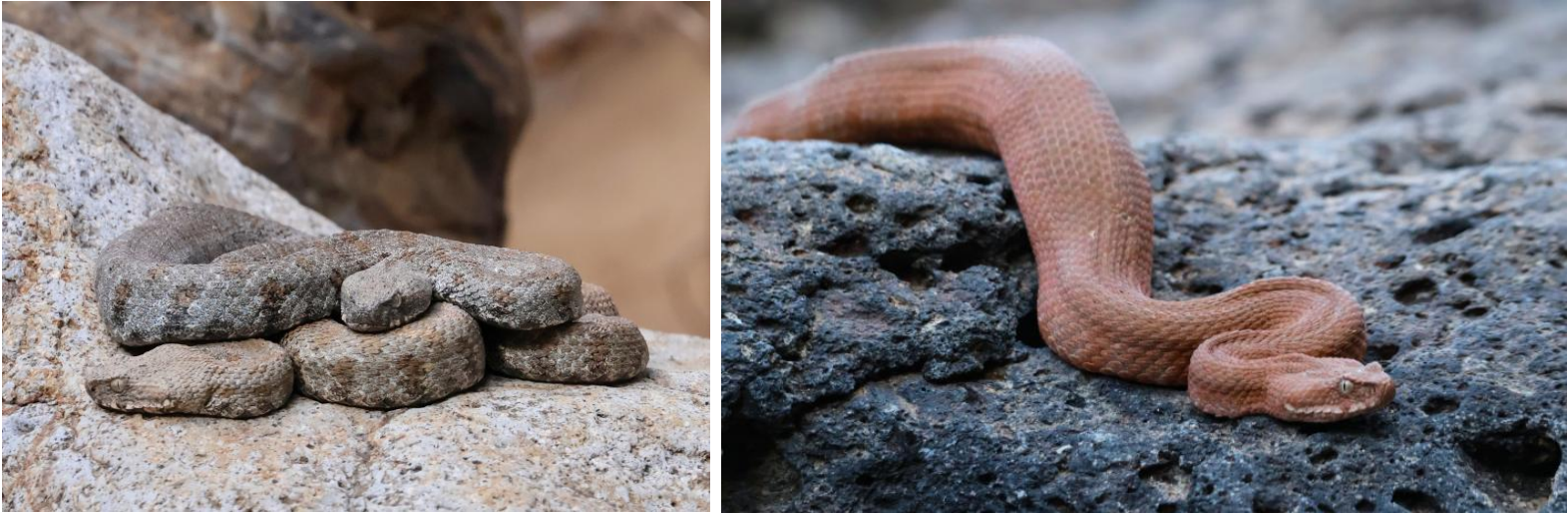
Colour morphs of Milos viper (photos: Thomas Daftsios)
2) Maciej Białoskórski
(Department of Comparative Anatomy, Jagiellonian University Kraków)
Recent changes in altitudinal distribution of amphibians in the Tatra National Park (Southern Poland)
Climate change poses a serious threat to amphibians worldwide, leading, for example, to local extinctions and shifts in occupied habitats. Such changes can be especially pronounced in montane regions and may lead to large-scale altitudinal shifts in amphibian distribution. In this project, together with my team, I will investigate potential changes in the elevational distribution of amphibians in the Tatra Mountains, a Central European montane region that has experienced a measurable increase in mean annual air temperature and changes in snow cover duration.
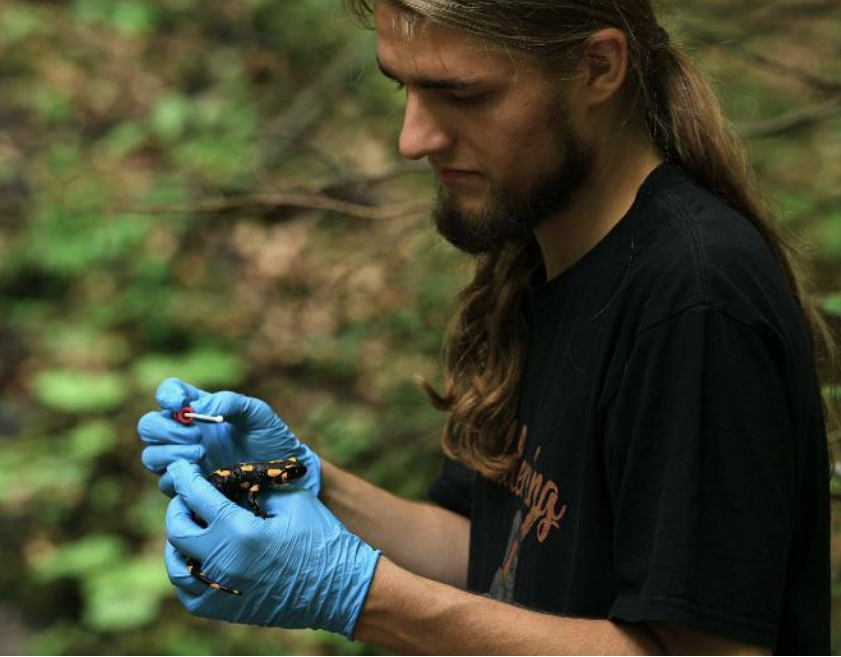
(photo by: Krzysztof Basista)
Importantly, amphibian populations in this area were surveyed in detail over a decade ago, providing valuable baseline data. This creates a unique opportunity to quantify spatial and temporal changes in the amphibian community. Fieldwork will be conducted over two breeding seasons, along selected transects spanning the entire elevational gradient (ca. 800–2000 m a.s.l.). The study will identify species that have expanded their altitudinal ranges and may reveal species that have recently colonised lower elevations of the Tatra Mountains. In addition, the project will assess which sites, habitat types, and species appear most stable, and which show signs of decline.
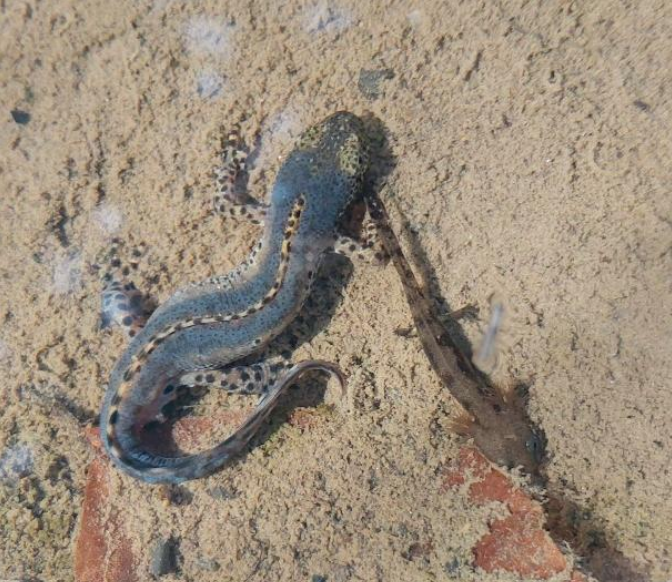
Alpine newt & fire salamander larvae
(photo: Julia Fronczyk)

Tatra National Park